Archives
- 2026-06
- 2026-05
- 2026-04
- 2026-03
- 2026-02
- 2026-01
- 2025-12
- 2025-11
- 2025-10
- 2025-09
- 2025-03
- 2025-02
- 2025-01
- 2024-12
- 2024-11
- 2024-10
- 2024-09
- 2024-08
- 2024-07
- 2024-06
- 2024-05
- 2024-04
- 2024-03
- 2024-02
- 2024-01
- 2023-12
- 2023-11
- 2023-10
- 2023-09
- 2023-08
- 2023-07
- 2023-06
- 2023-05
- 2023-04
- 2023-03
- 2023-02
- 2023-01
- 2022-12
- 2022-11
- 2022-10
- 2022-09
- 2022-08
- 2022-07
- 2022-06
- 2022-05
- 2022-04
- 2022-03
- 2022-02
- 2022-01
- 2021-12
- 2021-11
- 2021-10
- 2021-09
- 2021-08
- 2021-07
- 2021-06
- 2021-05
- 2021-04
- 2021-03
- 2021-02
- 2021-01
- 2020-12
- 2020-11
- 2020-10
- 2020-09
- 2020-08
- 2020-07
- 2020-06
- 2020-05
- 2020-04
- 2020-03
- 2020-02
- 2020-01
- 2019-12
- 2019-11
- 2019-10
- 2019-09
- 2019-08
- 2019-07
- 2019-06
- 2019-05
- 2019-04
- 2018-11
- 2018-10
- 2018-07
-
Anisomycin br Competing interests br Introduction
2021-12-20
Competing interests Introduction An effective vaccine against the Human immunodeficiency virus (HIV) is still to be created, even though many strategies have already been tried [1]. Antibodies against a vaccine antigen must be either neutralizing or inducing cellular cytotoxicity [1]. It is kn
-
The HRTOF MS of showed a
2021-12-20
The HRTOF-MS of showed a quasi-molecular ion peak at / 525.3044 [M+Na], corresponding to a quasi-molecular formula of CHNONa (Calcd for CHNONa: 525.3053). IR absorptions at 1680 and 1522cm suggested the presence of amide functions. Based on an analysis of 1D and 2D NMR spectra, the presence of one
-
Ubiquitination of GlyRs subunit on plasma
2021-12-20
Ubiquitination of GlyRs-α1 subunit on plasma membrane has been shown to initiate the receptor O-1602 and subsequent degradation in lysosomes (Buttner et al., 2001). However, the specific E3 ligase responsible for GlyRs-α1 ubiquitination is largely unknown as yet. Also, the functional consequence of
-
In conclusion we have designed and characterized a
2021-12-20
In conclusion, we have designed and characterized a novel series of EAAT-blockers, exemplified by (-[4-(2-bromo-4,5-difluorophenoxy)phenyl]--asparagine)—a potent, selective, competitive non-substrate inhibitor of EAAT-2. As one of the most potent and selective EAAT-2 inhibitors identified to date, c
-
The genes for the receptors for
2021-12-20
The genes for the receptors for peptides similar to glucagon are dispersed on three human chromosomes, with two on chromosome 17 (GCGR and GLP2R) and one each on chromosomes 6 (GLP1R) and 19 (GIPR) (see Table S1). The exon–intron gene structures of these genes are similar, as are the genes for other
-
The presence of ghrelin s mRNA in the
2021-12-20
The presence of ghrelin's mRNA in the eye and the presence of ghrelin in the aqueous humor, along with a decrease of its levels in glaucoma, suggest a local role for this peptide in the ocular tissue [8], [16], [18]. There is no available data regarding the presence of GHSR-1 in the anterior segment
-
br Materials and methods br Results br
2021-12-20
Materials and methods Results Discussion Prior studies established that Notch signaling regulates the differentiation of hair cells and supporting cells during inner ear development (reviewed in Kiernan (2013)). Notch signaling is a multistep process that requires the interaction between a
-
aphidicolin sale In addition to indoles two additional struc
2021-12-20
In addition to indoles –, two additional structural variants were synthesized to explore the synthetic flexibility and structure–activity relationships of this system. The first of these was the homologation of the acetic aphidicolin sale side chain to prepare compound (). The extension of the cha
-
Since stroke and cerebrovascular diseases were considered se
2021-12-20
Since stroke and cerebrovascular diseases were considered serious AEs following vaccination, we performed manual chart review to confirm the diagnosis and symptom onset date for all stroke and cerebrovascular disease cases identified by ICD-9 codes. Chart review of 131 presumptive cases confirmed 82
-
br Materials and methods br Results br Discussion This was
2021-12-20
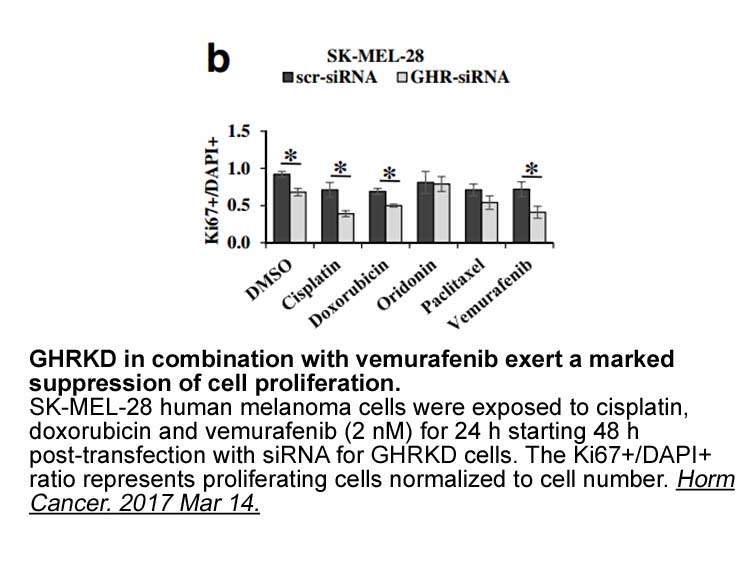
Materials and methods Results Discussion This was the first large study to quantify both total HIV DNA and integrated HIV DNA, which is the main persistent form of HIV [25,26], in samples collected during PHI, chronic infection, and at various time points until the AIDS stage, which was mad
-
Oltipraz has been shown to inhibit the
2021-12-20

Oltipraz has been shown to inhibit the growth of HCC Fludara australia and is being evaluated in clinical trials as a potential anti-cancer drug for HCC (Mann et al., 2009; Piton et al., 2005; Yates and Kensler, 2007). The present observation that pre-treatment of tumorigenic liver cells with oltip
-
Electrostatic potential along with measurement and modeling
2021-12-18

Electrostatic potential along with measurement and modeling of corresponding energies is vital for inferring protein properties, lone or complexed with ligands. DelPhi was used for solving Poisson Boltzmann equation, obtaining grid, total reaction and coulombic energies after solvating the proteins
-
In the inhibitory kinetic studies
2021-12-18

In the inhibitory kinetic studies, five different concentrations of DEL carefully selected from the near-linear region of the dose–response curve (0.5 μM, 1.0 μM, 2.0 μM, 4.0 μM, and 8.0 μM) were used. The Vm values at fixed [CDNB]–varied [GSH] and at fixed [GSH]–varied [CDNB] were 10.4 ± 0.22 U mg−
-
Another consistent observation in our
2021-12-18

Another consistent observation in our studies was the lower plasma catecholamine concentrations in the exercised GHSR-null mice, suggesting a diminished sympathoadrenal response. A proper sympathoadrenal response is essential for increasing substrate utilization during exercise [81]. Thus, the reduc
-
Metronidazole australia When we compared the effects in
2021-12-17
When we compared the effects in FST induced by GAL and GAL(1–15), we observed that the increase in the immobility induced by GAL(1–15) was significantly higher than the one induced by GAL (Millon et al., 2015). Moreover, in climbing behaviour, GAL(1–15) also induced a stronger decrease in climbing r
16925 records 569/1129 page Previous Next First page 上5页 566567568569570 下5页 Last page